
Make Your Business Easier to Visit: A First-Time Customer Walkthrough
· By LocalBizUS
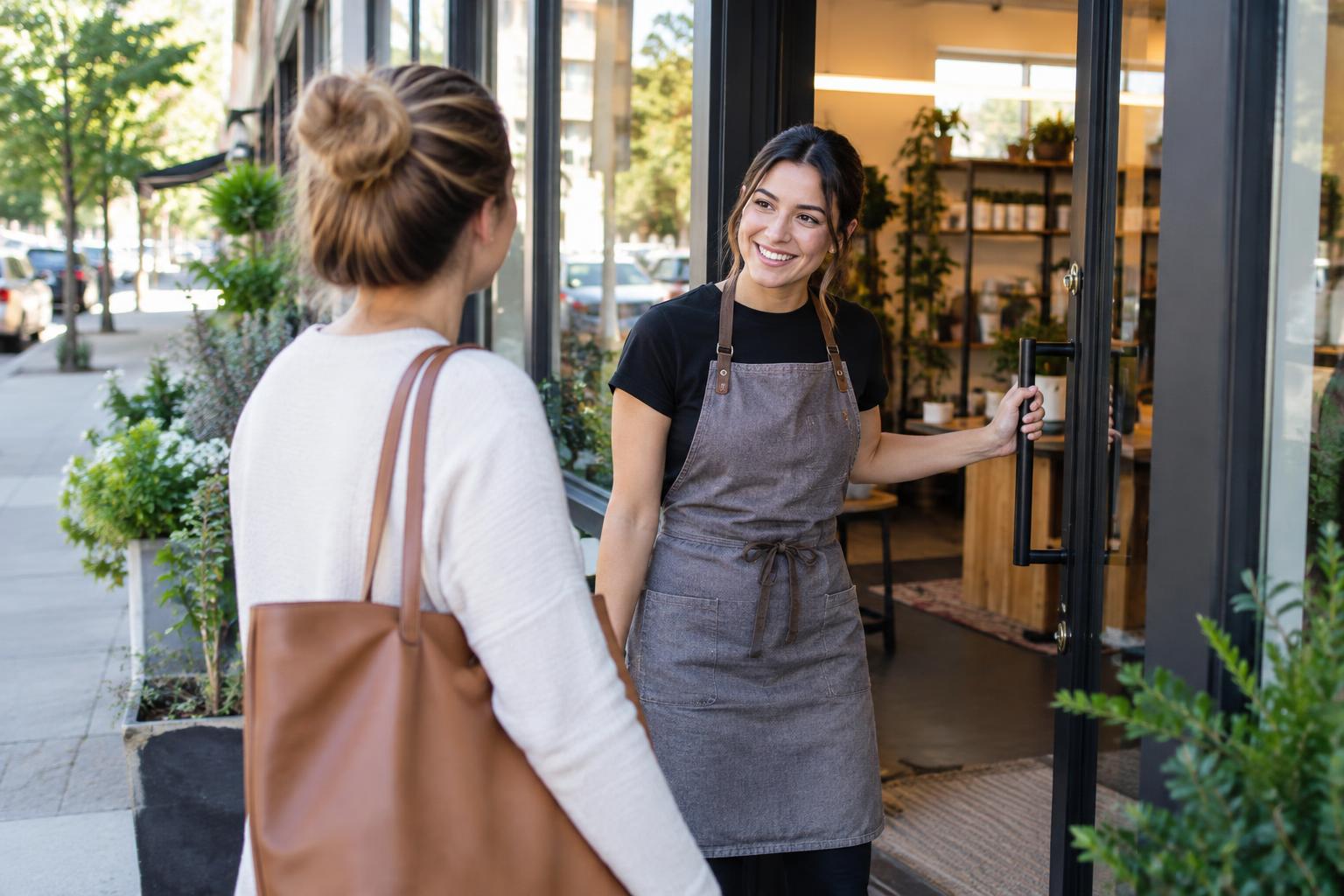
A customer can find your business online and still struggle to find your front door.
Maybe the map leads to the back of the building. Maybe your entrance faces a side street. Or maybe someone walks inside and cannot tell whether to wait, approach the counter, or check in with a staff member.
These are small obstacles, but they land at an important moment: someone has decided to give your business a try. A first-time customer walkthrough helps you spot the uncertainty that regulars—and owners—no longer notice.
This is not a full website redesign or a renovation project. It is a practical check of the journey from looking up your address to knowing what to do inside.
Start Outside Your Own Routine
You probably arrive through the same entrance every day. You know where to park, which door opens, and where everything belongs. That familiarity makes it easy to overlook confusing details.
Ask someone unfamiliar with your location to walk through the arrival process while you observe. Avoid coaching them unless safety requires it. If you work alone, approach from a different direction and use only the information a customer can access.
Have your helper answer these questions:
- Can I tell which building and entrance belong to this business?
- Do the directions bring me to a usable arrival point?
- Is it clear where I may park or where pedestrians should enter?
- Once inside, do I know my next step?
Write down each point where they pause or ask for help. Those moments give you a focused improvement list.
Describe the Last Part of the Trip
A street address does not always explain how to reach the door. Shared buildings, shopping centers, upper-floor locations, and rear entrances often need one extra sentence.
Example wording to adapt only if accurate: “Our entrance faces the courtyard, beside the building directory. Look for our name on the glass door.”
Use fixed, visible landmarks rather than temporary decorations or a neighboring tenant that might change. If your location has a suite number, include it wherever you provide arrival details.
Keep parking instructions specific and verified. Do not suggest that customers use nearby lots unless you know they are permitted to do so. When navigation sends people to the wrong side of a property, add a clear arrival note and request a correction through the relevant map service.
Show the Entrance Customers Will Actually Use
An attractive interior photo can introduce your business, but an exterior photo answers a different question: “Am I in the right place?”
Take a current photo from the direction customers normally approach. Include enough of the building to make the doorway recognizable. If there are several similar entrances, a closer photo can help show the correct one.
Before sharing, check that the image does not expose customer faces, license plates, or private information unnecessarily. Replace it when signage or the entrance changes.
LocalBizUS is a US local-business directory with free listings, descriptions, photos, and contact information. A clear entrance photo and an accurate description can make your listing more useful to someone preparing to visit.
For other ways to turn everyday details into helpful updates, see Simple Content Ideas Any Local Business Can Use to Attract More Customers.
Explain What Happens Just Inside
Stand inside your entrance and look around without relying on what you already know. Where should a new customer go? What signals tell them?
A shop might need a visible pickup point. A salon might need a simple check-in instruction. A restaurant might need to clarify whether guests should wait to be seated or order at the counter.
Use the fewest words that explain the action. For example, if it matches your process: “Here for a pickup? Please check in at the counter.” Position the instruction where customers make that decision, not after they have already walked past it.
Give staff a matching greeting so the sign and the spoken instructions reinforce each other. That connects naturally with the repeatable practices in 5 Customer Service Habits That Build Loyalty for Local Businesses.
Replace Vague Reassurance With Useful Facts
People arrive with different mobility, sensory, and communication needs. Avoid broad claims about accessibility that you have not verified. Describe observable conditions instead.
Check details such as whether the entrance has steps, whether another entrance provides a step-free route, and how someone can contact your team with an arrival question. Share only information you have confirmed.
Put essential instructions in readable text, not only in a photo. Use clear wording and signs with strong contrast. A customer should not have to decipher decorative lettering to find the entrance or check-in point.
Your First-Visit Checklist
Choose the most confusing part of arrival and fix that first. Then repeat the walkthrough to see whether the change actually helps.
- Confirm the address, suite number, and customer entrance.
- Test directions from a customer's likely approach.
- Verify parking and pedestrian arrival instructions.
- Add or refresh a recognizable entrance photo.
- Make the first action inside obvious.
- Check that signs and staff instructions agree.
- Describe access conditions accurately and provide a contact option.
- Update arrival information whenever the physical setup changes.
You do not need to explain every detail of your business before someone arrives. Just remove the avoidable guesswork between finding you and feeling welcome.
Want to be discovered locally? List your business on LocalBizUS.